What Is Calabrian Cuisine? Food and Traditions
What Is Calabrian Cuisine? Food and Traditions
Explore the ingredients, preservation traditions, and bold Southern Italian flavors that define Calabrian cuisine and Civico 1845.
Calabrian cuisine is the regional cooking of Calabria in Southern Italy. It is bold, seasonal, and shaped by chile peppers, olive oil, tomatoes, eggplant, preserved vegetables, beans, handmade pasta, seafood, and cured meats.
The region's food carries mountain villages, fishing towns, olive groves, family gardens, and a long habit of preserving the harvest. Calabria cooks with intensity because it had to: drying, curing, pickling, fermenting, and seasoning ingredients so they could last, travel, and feed families well beyond the moment they were picked.
What makes Calabrian food different
Calabrian food traditions are shaped by a strong pantry. Chili peppers, olive oil, tomatoes, eggplant, onions, beans, wild greens, herbs, citrus, seafood, and cured meats create a cuisine that is compact but expressive. The dishes are not usually complicated. Their character comes from ingredient quality, preservation, and bold seasoning.
Compared with the better-known cuisines of Northern or Central Italy, Calabria feels more elemental. The flavors are less creamy and less delicate. They lean toward heat, salt, smoke, acidity, herbs, and olive oil. That directness is the charm.
The region’s identity comes from the balance among chile, olive oil, vegetables, seafood, legumes, and preserved foods.
The dishes that carry the region
A few foods explain the region quickly. 'Nduja, the spicy spreadable salami from Calabria, brings chili heat and cured pork richness to bread, pizza, sauces, and pasta. Fileja, the twisted handmade pasta, catches tomato sauces and ragus beautifully. Lagane e cicciari, pasta with chickpeas, shows the older grain-and-legume soul of Southern Italian cooking.
Soppressata belongs to the same preservation tradition but has a firmer texture than spreadable 'nduja. Together, these foods show how curing could extend the life of ingredients while concentrating flavor. They are part of a broader pantry that also includes preserved eggplant and peppers, olives, capers, tomatoes, and citrus.
Chili peppers, olive oil, and the Calabrian pantry
Calabrian chili peppers can be fresh, dried, crushed, or preserved in oil. They add fruitiness, color, and a lingering warmth to vegetables, pasta sauces, and cured meats.
Olive oil is the other quiet force. It softens bitter greens, carries garlic and chili, finishes soups, and turns grilled vegetables into something complete. Alongside it are preserved eggplant, peppers, olives, capers, tomatoes, and citrus, especially bergamot, which gives Calabria one of its most distinctive aromas.
From the coast to the mountains
Calabria's geography helps explain the variety within this pantry. Coastal cooking draws on seafood, citrus, tomatoes, and olive oil, while inland traditions make generous use of beans, chickpeas, vegetables, wild greens, pasta, and preserved meats. The categories overlap, but the contrast explains how the same regional cuisine can feel bright and briny in one dish, earthy and slow-cooked in the next.
This is also why Calabrian cooking can adapt naturally to a plant-based table. Legumes, vegetables, herbs, chile, and olive oil are foundational ingredients rather than modern replacements. Meat and seafood remain important parts of the tradition, but they do not define every plate.
A cuisine shaped by history and place
Calabria's food culture reflects centuries of movement through Southern Italy: Greek, Roman, Arab, Spanish, and local rural influences all left traces. The region absorbed what worked and turned it into food that suited its terrain and daily life.
That is why markets are so important to understanding Calabrian cooking. Hanging chilis, garlic, herbs, vegetables, fruit, seafood, and cured products are not decorative symbols. They are the working vocabulary of the cuisine.
Beyond the savory pantry
Calabria's instinct for preserving the harvest also carries into sweets. Regional desserts often draw on figs, honey, nuts, and citrus rather than relying only on heavy sweetness. Tartufo di Pizzo, the frozen specialty associated with the coastal town of Pizzo, is a different expression of the same regional character: a strong sense of place translated into a memorable finish.
These sweets are best understood as part of the cuisine's larger rhythm. Bright citrus can follow chile and cured flavors; figs and honey can soften a meal built around bitter greens, olive oil, or seafood. The contrast is deliberate, but the ingredients remain recognizable.
How Civico 1845 carries Calabria into San Diego
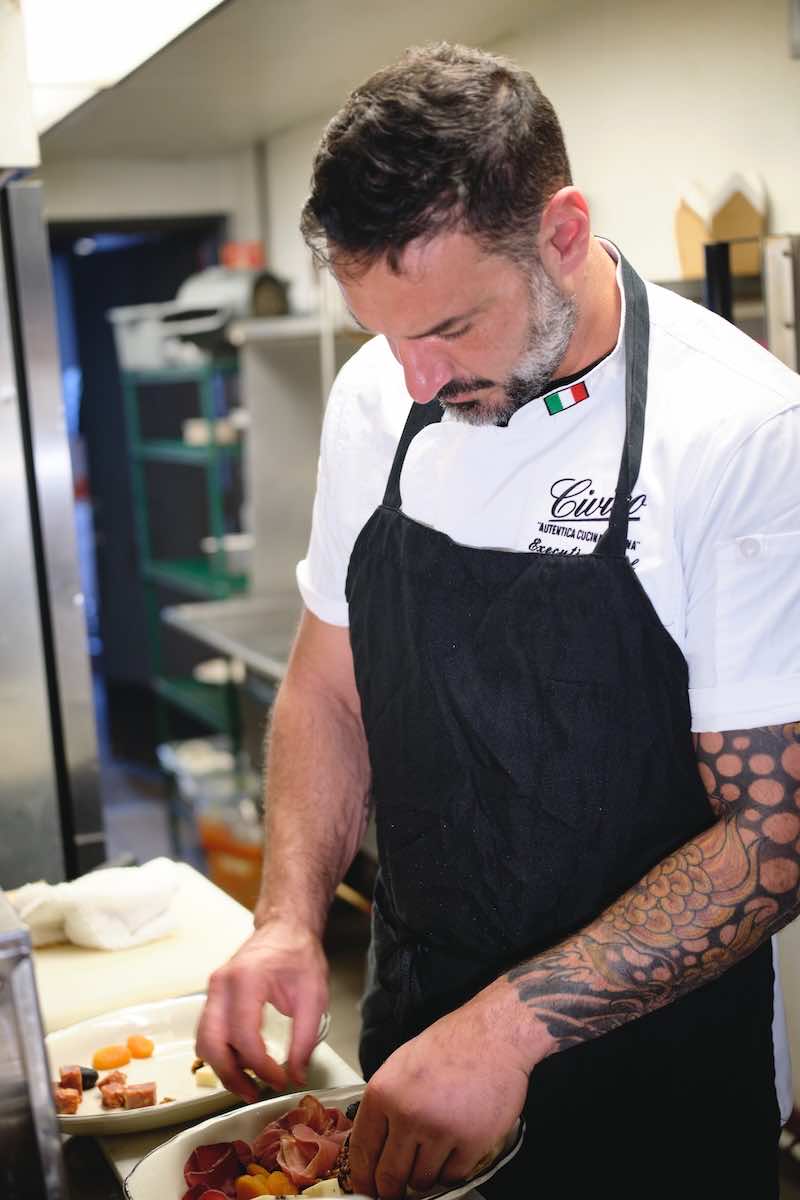
Brothers Pietro and Dario Gallo opened Civico 1845 to share the Southern Italian food they grew up with: handmade pasta, bright vegetables, olive oil, seafood, and dishes built with restraint rather than excess. Pietro's connection to cooking began in his mother's kitchen in Calabria, and that background gives the restaurant a specific regional point of view rather than a generic Italian identity.
The menu keeps Calabrian tradition at the center while giving it a contemporary San Diego perspective. Classic and plant-based Italian dishes sit beside one another, reflecting the same attention to vegetables, pasta, olive oil, and bold but balanced flavors. Because dishes and ingredients can change, the current menu is the best source for what is available on a particular visit.
For a first experience, think in courses rather than searching for one definitive plate. Begin with something to share, follow with pasta or a seasonal main, and ask the team which current dishes best express Calabria's balance of heat, acidity, vegetables, seafood, and preserved flavor.
Frequently asked questions
What is authentic Calabrian cuisine?
Authentic Calabrian cuisine is Southern Italian cooking shaped by the region's mountains, coastline, agriculture, and preservation traditions. Common building blocks include chile peppers, olive oil, tomatoes, vegetables, legumes, citrus, seafood, cured meats, and handmade pasta.
Is all Calabrian food spicy?
No. Chile is an important regional signature, but it can contribute fruitiness, color, and gentle warmth as well as strong heat. Many dishes depend just as much on olive oil, vegetables, beans, seafood, herbs, and acidity.
Which ingredients are especially associated with Calabria?
Peperoncino, 'nduja, soppressata, olive oil, eggplant, tomatoes, peppers, beans, wild greens, citrus, bergamot, seafood, and dried or preserved produce all help define the regional pantry.
Where can diners explore Calabrian cooking in San Diego?
Civico 1845 focuses on Calabrian food at 1845 India Street in Little Italy, San Diego. Use the Visit page to confirm current service hours, covered heated patio details, and live Resy availability before arriving.
Continue exploring Civico's Calabrian story
Read the plant-based Calabria story, homemade pasta article, sourcing guide, restaurant story, antipasti guide, and current menu.