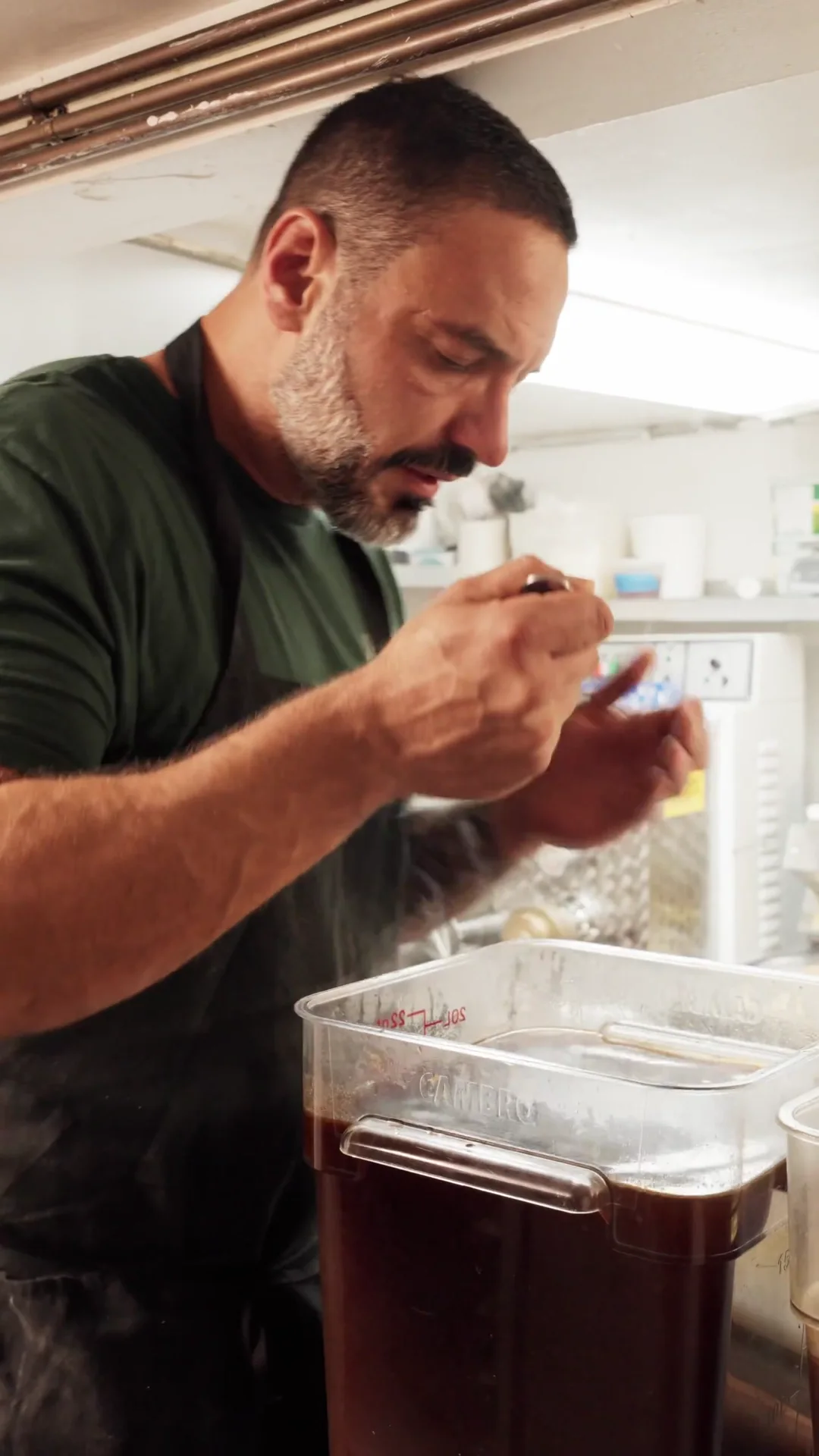
Chef Pietro Gallo on Calabrian Cooking at Civico 1845
Chef Pietro Gallo on Calabrian Cooking at Civico 1845
Chef Pietro Gallo discusses Calabrian cooking, the family memory behind parmigiana di melanzane, the meaning of mantecatura, and the patient techniques used in Civico 1845’s kitchen.
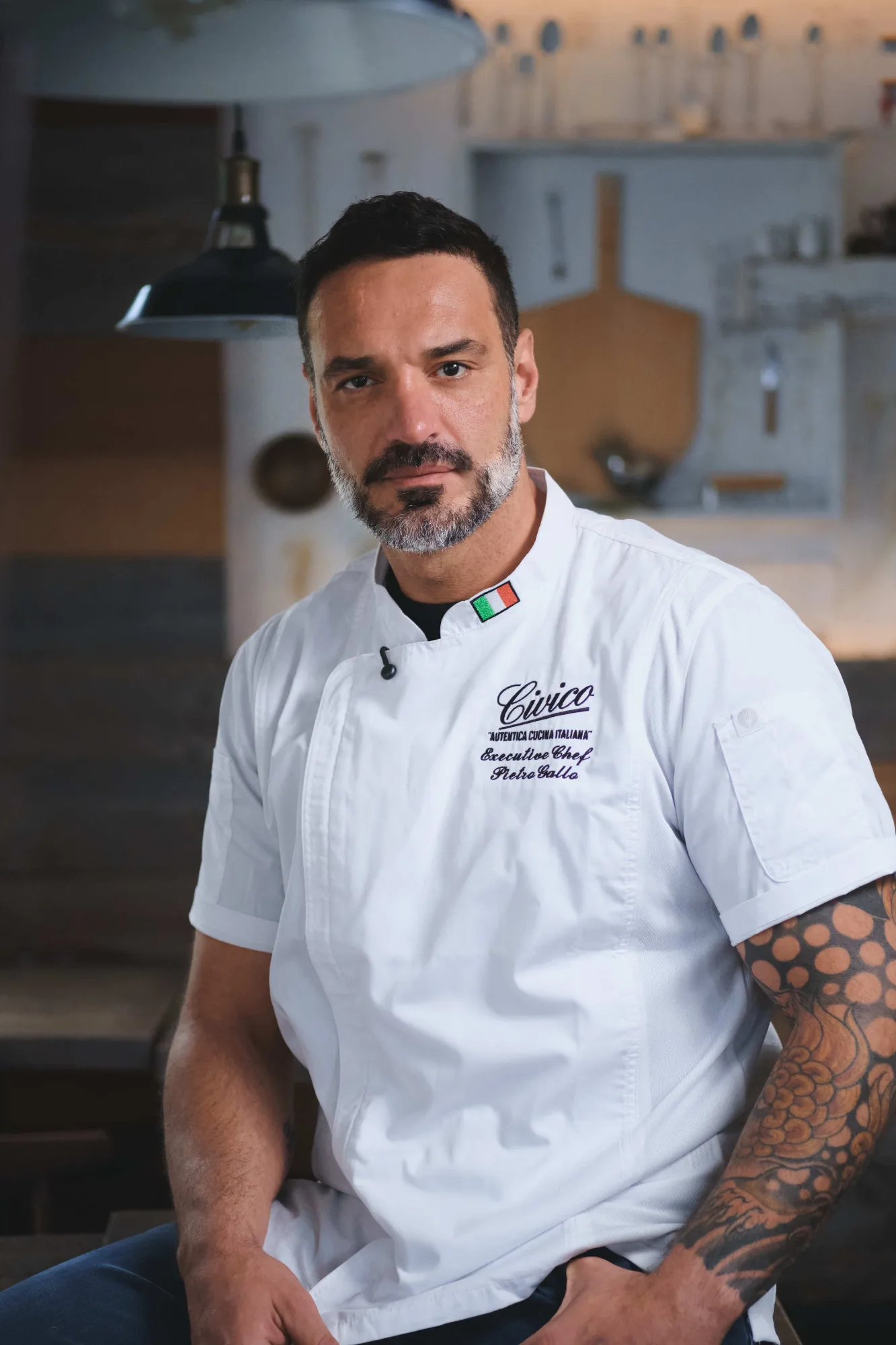
Who Is Chef Pietro Gallo?
Pietro Gallo is the owner and executive chef of Civico 1845. He grew up in Calabria, studied at culinary school, and built his approach through professional kitchens as well as the daily cooking he watched at home from his mother and grandmother. At Civico 1845 in Little Italy, he applies that Calabrian background to both the traditional and plant-based menus.
For Chef Pietro Gallo, cooking is built on memory, technique, and patience. In a recorded conversation at Civico 1845, the restaurant’s owner and executive chef spoke about the Calabrian perspective behind the menu, the dishes he recommends to first-time guests, and the kitchen principles he refuses to compromise.
Civico’s family story is told on the Our Story page.
A Calabrian Point of View
When asked to choose between olive oil and butter, Pietro did not hesitate. He chose olive oil and explained that it reflects the cooking of Southern Italy, where he is from. Butter, he noted, appears more often in the cuisines of Northern Italy, while olive oil plays a central role in the south.
Seafood is another important part of that Calabrian perspective. Pietro points to Linguine alla Pescatora, prepared with calamari, shrimp, clams, and mussels, as one of the dishes that expresses this connection clearly.
This Southern Italian foundation also appears throughout Civico’s use of vegetables, pasta, and restrained preparations. It is part of the regional story explored in Civico’s guide to Calabrian cuisine.
The Parmigiana That Brings Back Italy
One dish carries a particularly personal memory for Pietro: parmigiana di melanzane. Civico prepares the eggplant with San Marzano tomato, basil, Parmigiano Reggiano, and smoked provolone.
Pietro remembers eating the dish during weekends in Italy. He acknowledges that reproducing his grandmother’s version exactly may be impossible, but trying to come closer to that memory remains meaningful to him. It is a dish he finds deeply satisfying because of the way its ingredients and flavors come together.
Why Shortcuts Do Not Belong in the Kitchen
Pietro’s cooking philosophy is direct: “I don’t like shortcuts. They never work.” He describes cooking as simple when the cook understands what needs to be done, but simplicity still requires passion, concentration, and time.
The Pappardelle Brasato illustrates that approach. Pietro says the short rib is marinated overnight before being cooked for another nine to ten hours. This slow preparation allows the meat to become tender while the tomato sauce takes on the flavor of the braising juices.
Tomato sauce and Bolognese also require patient reduction. For Pietro, these long preparations are part of the work involved when a kitchen makes its food from scratch. Readers can learn more about this process in How We Make Homemade Pasta at Civico 1845.
Mantecatura: Bringing Pasta and Sauce Together
Pietro is equally precise about the final moments of cooking pasta. Too little sauce can leave a plate bland, while too much can overwhelm the pasta. The cook must find the right balance.
He describes the next step using the Italian term mantecatura: tossing the pasta and sauce together so the sauce becomes incorporated throughout the dish. Instead of placing sauce on top of cooked pasta, the kitchen finishes them together. The goal, as Pietro explains, is for every bite to contain both pasta and sauce.
He also emphasizes salting the cooking water. The pasta needs to absorb seasoning while it cooks rather than relying on adjustments made only after it reaches the plate.
What Chef Pietro Recommends for a First Visit
Pietro begins his first-visit recommendations with the zucchini blossom. The traditional version is filled with ricotta, Parmigiano, and Calabrian soppressata before receiving a light tempura preparation.
He also recommends the calamari. The kitchen fries it briefly to preserve tenderness while developing a light golden exterior.
For pasta, Pietro returns to Pappardelle Brasato and Linguine alla Pescatora. For a main course, his first choice is branzino, grilled simply and served with sautéed vegetables. The complete current selection is available on the Civico 1845 menu.
The Same Attention for Plant-Based Dishes
When discussing Civico’s plant-based cooking, Pietro highlights the plant-based calamari, zucchini blossom, lasagna, and mushroom pappardelle. He describes the calamari as a pea-protein preparation that uses seaweed to suggest a flavor associated with the ocean.
The mushroom pappardelle combines mushrooms, herbs, and garlic. Pietro describes it as a dish with enough depth and attention to stand beside the restaurant’s traditional offerings.
These dishes can be explored in the restaurant’s plant-based Italian menu guide. Because preparations can change, guests with dietary questions should confirm current details with the restaurant.
The Feeling Pietro Wants Guests to Take Home
For Pietro, the most meaningful response comes when guests tell him that their experience made them feel as though they were in Italy.
To experience Chef Pietro’s cooking in Little Italy, review the Civico 1845 reservations guide before choosing a table.